
Salivary gland tumours are abnormal growths that develop in the salivary glands, most commonly in the parotid, submandibular, and minor salivary glands. While many salivary gland tumours are benign, some can be cancerous and require prompt surgical treatment. Early diagnosis and expert surgical management are essential to prevent disease progression and preserve important functions such as facial movement, swallowing, and speech.
Dr. Nikhil Mitkar specializes in the evaluation and surgical treatment of benign and malignant salivary gland tumours. Every patient receives a personalized treatment plan based on the tumour type, size, location, and pathology, with a focus on complete tumour removal while preserving nearby nerves and surrounding healthy tissues whenever possible.
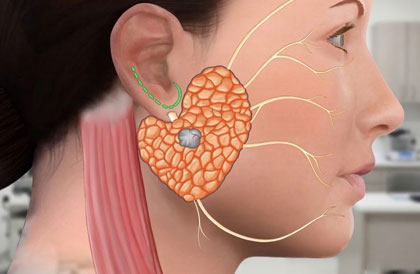
A thorough clinical examination along with appropriate imaging and biopsy helps determine the nature of the tumour. Based on the diagnosis, an individualized treatment plan is developed to provide the most effective and safest surgical care.
A lump or swelling near the jaw, ear, or neck should never be ignored. Early diagnosis and expert surgical treatment can significantly improve outcomes while preserving facial function and quality of life. Consult Dr. Nikhil Mitkar for comprehensive evaluation and advanced surgical management of salivary gland tumours.
A salivary gland tumour is an abnormal growth that develops in one of the salivary glands, most commonly the parotid or submandibular gland. These tumours may be benign or malignant, making early diagnosis and appropriate treatment essential.
Most salivary gland tumours are treated surgically to establish a definitive diagnosis and prevent further growth or complications. The type of surgery depends on the size, location, and nature of the tumour.
The facial nerve runs through the parotid gland, and preserving it is a priority during surgery whenever possible. Advanced surgical techniques are used to carefully protect the facial nerve while completely removing the tumour.
Recovery depends on the type of surgery performed and the patient's overall health. Most patients resume normal daily activities within a few weeks, while complete healing may take a little longer. Regular follow-up appointments help ensure a smooth recovery.
Dr. Nikhil Mitkar is a Consultant Head & Neck Oncosurgeon with expertise in managing both benign and malignant salivary gland tumours. He combines advanced surgical techniques, facial nerve preservation, personalized treatment planning, and comprehensive follow-up care to deliver the best possible functional and oncological outcomes.