
The parotid gland is the largest of the salivary glands and is located just in front of the ear. Tumours of the parotid gland may be benign or malignant and require careful evaluation by a Head & Neck Oncosurgeon. Since the facial nerve passes through the parotid gland, surgery demands exceptional precision to remove the tumour while preserving facial movement whenever possible.
Dr. Nikhil Mitkar specializes in the diagnosis and surgical management of parotid gland tumours using advanced techniques focused on complete tumour removal, facial nerve preservation, and optimal functional and cosmetic outcomes. Every treatment plan is individualized according to the tumour type, location, and stage.
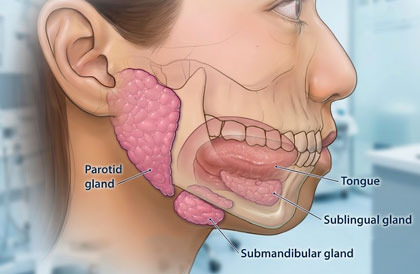
Every patient undergoes a detailed clinical assessment followed by appropriate imaging and biopsy to accurately diagnose the tumour. Based on these findings, a customized treatment plan is prepared.
A persistent swelling near the ear or jaw should never be ignored. Early diagnosis and timely surgical treatment can prevent complications and improve outcomes. Consult Dr. Nikhil Mitkar for expert evaluation and advanced surgical management of parotid gland tumours with a focus on facial nerve preservation and complete tumour removal.
A parotid tumour is an abnormal growth that develops in the parotid gland, the largest salivary gland located in front of the ear. These tumours may be benign or malignant and should be evaluated by a Head & Neck Oncosurgeon for accurate diagnosis and appropriate treatment.
The facial nerve passes through the parotid gland, making its preservation an important part of surgery. Advanced surgical techniques are used to carefully identify and protect the facial nerve whenever it is not involved by the tumour, helping maintain normal facial movement.
Diagnosis typically includes a detailed clinical examination, ultrasound, CT scan or MRI, and Fine Needle Aspiration Cytology (FNAC). These investigations help determine whether the tumour is benign or malignant and guide the most appropriate treatment plan.
Recovery depends on the extent of surgery and the nature of the tumour. Most patients recover within a few weeks, while complete healing may take longer. Regular follow-up visits help monitor recovery and ensure the best possible outcome.
Dr. Nikhil Mitkar is a Consultant Head & Neck Oncosurgeon with expertise in advanced parotid gland surgery and facial nerve preservation. He offers personalized, evidence-based treatment using modern surgical techniques, ensuring comprehensive care from diagnosis through recovery and long-term follow-up.